About the Ansonia “Plato” Clock
Title: Ansonia “Plato” Clock Model: A Collector’s Delight
The Ansonia “Plato” clock, crafted by the renowned Ansonia Clock Company between 1895 and 1915, is an exquisite mantel clock that continues to captivate antique clock collectors worldwide. This model is not only celebrated for its unique design but also for its precision and durability, characteristics synonymous with the Ansonia name.
The “Plato” clock’s case is typically constructed from high-quality materials such as brass, mahogany, or walnut, lending it an air of elegance and sophistication. The design features a bust of Socrates, the Greek philosopher Plato’s mentor, making this piece a novelty clock that stands out in any collection. The figure is adorned with intricate detail, from the flowing beard to the philosophical scroll held in his hand.
What makes the Ansonia “Plato” clock collectible goes beyond its aesthetic appeal. It represents a significant era in American clock-making history, the late Victorian period, when mass production techniques allowed for more affordable and intricate clocks to be produced, yet still with a touch of artistry. Additionally, the clock’s rarity, due to its limited production run during the Ansonia Company’s transition from a focus on novelty clocks to more traditional models, adds to its desirability among collectors.
Notable features of the “Plato” clock include a finely crafted movement with an eight-day duration and a striking mechanism that produces a melodious chime upon each hour. The clock’s pendulum is suspended from a figurine of Plato, further enhancing its unique design. For antique clock enthusiasts seeking a rare and captivating
Auction Records and Price History
The following 3 auction record(s) show actual sale prices for the Ansonia “Plato” model clock. Prices vary based on condition, originality, and current market demand. Search for more records on AntiqueClocksPriceGuide.com.
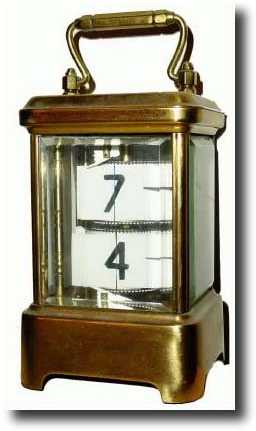
C.1904, Ansonia “Plato” digital clock..
This is one of 4 basic models using “turning leaf” dial arrangement patented by Eugene L. Fitch, New York, in 1902. Production in the 1904-06 period totaled 40,000 units. This very clock is no. 119 in the Cooperman inventory and is pictured in Palmer’s Treasury of American Clocks, page 175. All 4 panes of beveled glass are original and good; ticks and stops. Height 6 inches
Sold: $450 | Date: 10/1/2001 | Source: R. O. Schmitt Fine Arts
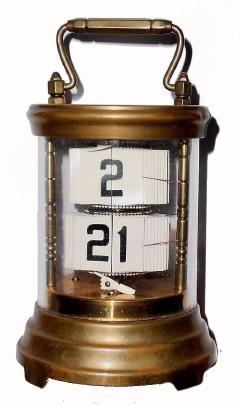
C.1904, Ansonia, PLATO CLOCK, first patented in 1902.
This one is in good original condition, with minor oxidation on the stamped brass case. Although several digital clocks occurred in Europe in the last quarter of the 19th century, this was the first all American digital novelty. Height 6.25 inches
Sold: $375 | Date: October 18, 2003 | Source: R. O. Schmitt Fine Arts
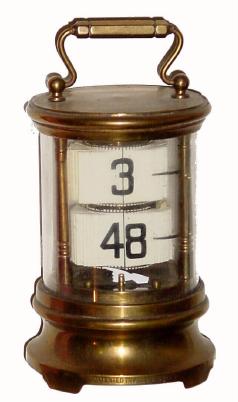
C.1904, Ansonia, Digital Flick Clock, as-found, from storage.
This is not a bad example of this model, but it is missing the top white “hand” that helps stabilize the number cards. It ticks robustly and the cards seem stay in place just fine without the extra “hand”. The numbers are bright and sharp and none are damaged and the cylinder glass lens is perfect with no chips. An OK clock for the beginning collector. Height 6.25 inches
Sold: $95 | Date: October 18, 2003 | Source: R. O. Schmitt Fine Arts