About the Ansonia “Buenos Dias” Clock
Title: Ansonia “Buenos Dias” Clock Model: A Collector’s Guide
The Ansonia “Buenos Dias” clock is a captivating mantel clock that graced homes during the late 19th and early 20th centuries. This model, produced between approximately 1895 and 1930, stands out as one of Ansonia’s most iconic designs.
The “Buenos Dias” mantel clock boasts a distinctive case crafted primarily from mahogany, complemented by decorative brass accents and intricate inlays. The clock face features a vibrant enameled dial with Roman numerals, set within an ornate frame adorned with floral motifs and the famous “Buenos Dias” greeting.
This model is highly collectible due to its striking design, excellent craftsmanship, and historical significance. The “Buenos Dias” clock was one of Ansonia’s first successful forays into the production of novelty clocks, combining functionality with an eye-catching presentation that appealed to a wide audience.
Notable features include the unique “Buenos Dias” greeting that appears every morning at sunrise, as well as the exquisite detail and craftsmanship evident in the clock’s case and dial. The “Buenos Dias” clock is not only an attractive addition to any antique collection but also a fascinating timepiece with a rich history and intriguing design elements that continue to captivate collectors today.
Auction Records and Price History
The following 1 auction record(s) show actual sale prices for the Ansonia “Buenos Dias” model clock. Prices vary based on condition, originality, and current market demand. Search for more records on AntiqueClocksPriceGuide.com.
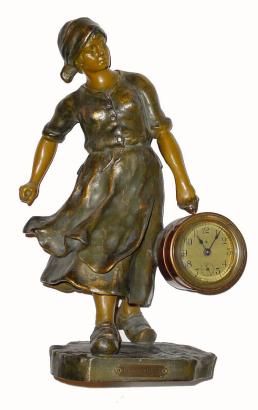
C.1914, Ansonia Clock Co., BUENOS DIAS, 8-Day figural clock in good original condition.
This is novelty No. 268, and is also known as “Good Morning” (came in both language versions). Movement is sound, but ticks and stops Height 11.75 inches
Sold: $480 | Date: October 18, 2003 | Source: R. O. Schmitt Fine Arts